Europe Travel Power: How to Stay Charged On The Go
Preparing for a European adventure means more than just booking flights and picking out outfits. Keeping your essential devices powered up across different countries and varied daily itineraries is critical. This guide cuts through the confusion, providing exact steps and product recommendations to ensure you stay connected and charged throughout your trip.
Adapting Your Tech for European Outlets
The first hurdle for any North American traveler in Europe is the electrical outlet. Europe uses a different plug shape and often a different voltage than what you find at home. Ignoring this can leave your devices dead or, worse, damaged. Understanding the basics of European electrical standards ensures your gadgets work flawlessly from Lisbon to Stockholm.
Understanding EU Plug Types
Most of Western and Central Europe, along with many other regions, primarily uses Type C and Type F plugs and sockets. Type C, also known as the "Europlug," has two round pins. Type F, or "Schuko," also has two round pins but includes two earth clips on the side, making it safer and more common for appliances. While a Type C plug fits into a Type F socket, the reverse is not always true for some two-pin adapters. Knowing this distinction helps when selecting your travel adapter.
Choosing the Right Travel Adapter
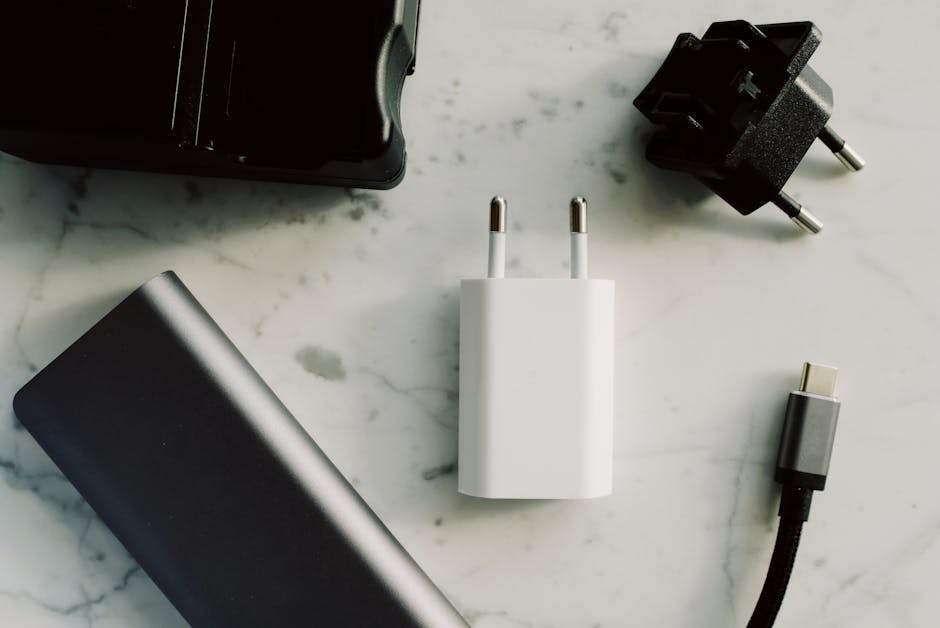
You need a physical adapter to change the shape of your North American plug (Type A or B) to fit into a European socket (Type C or F). A good universal travel adapter is your best bet. Look for one that explicitly mentions compatibility with European standards. Brands like OREI and EPICKA offer robust universal adapters that cover most global plug types, often including multiple USB ports. Expect to pay around $15-$25 for a reliable model. Ensure it's a "universal" adapter, not just a "Europe-specific" one, for future travel flexibility. Prioritize models with surge protection to safeguard sensitive electronics from unexpected power spikes.
Voltage Converters: When You Need One
Most modern electronics—smartphones, laptops, tablet chargers, camera battery chargers—are "dual voltage," meaning they can handle both 120V (North America) and 220-240V (Europe) electricity. Check the small print on your device's charger: if it says "Input: 100-240V, 50/60Hz," you only need a plug adapter. You do NOT need a voltage converter. Converters are generally required for older, single-voltage appliances like hair dryers, curling irons, or certain electric razors that only specify 120V input. Using a single-voltage appliance on European 240V without a converter will likely burn it out. For these items, it's often simpler and safer to buy a travel-specific dual-voltage version or just leave them at home.
Packing Light for Seamless European Exploration
Travel in Europe often involves navigating busy train stations, cobblestone streets, and multiple flights. Minimizing your luggage dramatically improves your experience. Less weight means easier movement, less stress, and more spontaneity. Here’s a quick list to get your packing strategy streamlined:
- The "Rule of Three": For clothing, aim for three sets: one to wear, one in the wash, one ready to wear. This applies to tops, bottoms, and underwear.
- Multi-Use Items: Pack versatile garments that can be dressed up or down. A dark pair of jeans or travel trousers, a few solid-color tops, and a light jacket are incredibly flexible.
- Layering is Key: European weather can be unpredictable. Pack thin layers you can add or remove to adapt to changing temperatures throughout the day.
- Compact Footwear: Limit yourself to two pairs of shoes: comfortable walking shoes and one slightly dressier but still comfortable option. Wear your bulkiest pair on travel days.
- Digital Documents: Store copies of passports, visas, and reservations on your phone and a cloud service. This reduces physical clutter and provides backup.
Sticking to these principles makes your European journey lighter and more enjoyable, allowing you to focus on the sights rather than wrestling with heavy bags.
The Indispensable Power Bank: Why You Need One
Relying solely on wall outlets while traveling in Europe is a rookie mistake. Between long train rides, sightseeing tours, and navigating with GPS, your phone’s battery will drain faster than you expect. A high-capacity power bank isn’t just a convenience; it’s a mission-critical piece of gear. It guarantees you won’t miss important photos, get lost due to a dead map app, or be unable to call for help in an emergency. For serious travelers, especially those with laptops or multiple devices, a powerful portable charger is non-negotiable.
Beyond the Wall: Charging on the Move
Imagine being on a scenic European train, your laptop battery flashing red, with hours until your next hotel. Or exploring an ancient city, your phone's GPS guiding you, only for it to die right before you find that hidden cafe. These scenarios are easily avoided with a robust power bank. It provides freedom from searching for cafes with outlets or sitting tethered to a wall socket. You can charge your smartphone, tablet, e-reader, or even a USB-C laptop while walking, riding, or waiting. This translates directly to more time exploring and less time worrying about battery life.
Key Specs for Your Primary Travel Charger
When selecting a power bank for European travel, focus on capacity and output wattage. A 25000mAh capacity is ideal for multiple phone charges or at least one full laptop charge. For output, look for high wattage, especially if you plan to charge laptops. A 100W USB-C PD (Power Delivery) output is crucial for fast-charging modern laptops like a MacBook Pro, Dell XPS, or even a Steam Deck. Multiple output ports (USB-A and USB-C) allow you to charge several devices simultaneously. For heavy users or those carrying a laptop, the INIU 25000mAh 100W power bank is a top recommendation. It weighs around 1.1 pounds (500g), which is manageable for its capacity, and comes with a clear LED display indicating remaining charge, so you’re never guessing. At $59.99, it’s a smart investment for peace of mind.
Tailored Charging for Specific Devices
Not all power banks are created equal, and your ideal portable charger depends heavily on the devices you carry. Travelers with laptops have different needs than those who primarily use an iPhone. Understanding these differences helps you select the most efficient and practical charging solution for your European itinerary.
Powering Laptops and High-Drain Devices
For anyone traveling with a laptop, especially for work or media consumption, a standard phone power bank simply won’t cut it. You need a higher capacity (typically 20,000mAh or more) and, critically, a high wattage output. Modern laptops require 45W, 65W, or even 100W via USB-C Power Delivery to charge at a reasonable speed, sometimes even while in use. The INIU 100W laptop charger (25000mAh) provides this crucial power output. It features 3 output ports (2 USB-C and 1 USB-A), meaning you can fast-charge your MacBook Pro and simultaneously top off your phone and iPad. Its 4.4/5 rating from over 5,000 reviews speaks to its reliability for demanding users. This model is engineered for consistent performance when you can’t be near a wall outlet, making it perfect for long flights, train journeys, or working remotely from a park bench.
Magnetic Charging for Modern Smartphones
For iPhone users from the 12 series onward, magnetic (MagSafe-compatible) charging offers unparalleled convenience. This eliminates the need for cables, allowing you to simply snap the power bank onto the back of your phone for on-the-go charging. While generally lower in capacity due to their compact size, these are perfect for keeping your phone topped up throughout the day without bulky cables. The INIU 10000mAh MagSafe power bank (Qi2.2 Certified) is an excellent choice for this purpose. It delivers 25W magnetic charging and includes a 45W PD fast-charging USB-C port for other devices or faster wired charging when needed. Its slim profile is ideal for slipping into a pocket or small bag. Rated 4.6/5 stars, it’s a newer option designed for seamless integration with your iPhone, ensuring you can navigate, photograph, and communicate without interruption. At $49.99, it’s a sleek, practical solution for iPhone users.
Here’s a quick comparison to help you decide:
| Feature | INIU 25000mAh 100W Power Bank | INIU 10000mAh MagSafe Power Bank |
|---|---|---|
| Primary Use | Laptop, Tablet, Multiple Devices | iPhone (MagSafe), Smartphones |
| Capacity | 25000mAh | 10000mAh |
| Max Output | 100W USB-C PD | 45W USB-C PD, 25W Magnetic |
| Ports | 2x USB-C, 1x USB-A | 1x USB-C |
| Price | $59.99 | $49.99 |
| Key Benefit | High power for laptops & multiple devices | Magnetic charging, slim design for iPhone |
Keeping Groomed On The Go: Essential Compacts
Travel in Europe often means being out and about all day, from early morning museum visits to late-night dinners. Maintaining a fresh appearance without overpacking your toiletry bag requires strategic choices. The goal is efficiency and versatility, focusing on multi-use products and travel-sized essentials that meet airline liquid restrictions.
Travel-Sized Skincare Routines
For skincare, stick to the absolute essentials. Decant your favorite cleanser, moisturizer, and SPF into TSA-compliant 3.4oz (100ml) bottles. Brands like Cerave or La Roche-Posay offer excellent travel-size options that are gentle and effective for most skin types. Consider solid alternatives like shampoo bars from Ethique or solid facial cleansers from Lush to save space and avoid liquid limitations altogether. A good tinted moisturizer with SPF can double as foundation and sun protection, streamlining your morning routine. Don't forget a compact lip balm with SPF, crucial for protecting lips from sun and wind exposure during long days of exploration.
Multi-Use Grooming Tools for Minimalists
Reduce clutter by bringing tools that serve multiple functions. A single, good quality razor (e.g., Gillette Mach3 Travel Razor) is sufficient. For hair, consider a styling cream or wax that can tame flyaways for both men and women, rather than bulky sprays. For men, a beard balm can condition facial hair and moisturize skin. Women might opt for hair ties that also double as bracelets (like the Invisibobble) or dry shampoo for quick refreshes. Toothpaste tablets from brands like Bite or Georganics are another excellent solid option, eliminating a liquid tube. Look for travel toothbrushes that fold into themselves to save space. The goal is maximum impact with minimum items, ensuring you look presentable without sacrificing precious luggage capacity.
Navigating EU Liquid Restrictions
Remember that the EU generally follows similar liquid restrictions to North America: liquids, aerosols, and gels in carry-on luggage must be in containers of 100ml (3.4oz) or less and fit into one transparent, re-sealable plastic bag (typically 1-liter capacity). Having your grooming essentials pre-packed this way at home saves valuable time and avoids last-minute repacking at airport security. For checked luggage, liquid limits are much more relaxed, allowing you to bring full-sized products if you prefer, though this adds weight and risk of leaks.
Troubleshooting Common Travel Charging Issues
Even with the right gear, travel can present unexpected charging challenges. Knowing how to diagnose and fix common problems quickly keeps your devices powered and your trip on track.
"Why isn’t my phone fast charging?"
Several factors can prevent fast charging. First, check your cable. Not all USB-C cables are created equal; ensure yours supports Power Delivery (PD) or Quick Charge (QC), especially for higher wattage devices. A damaged or low-quality cable will bottleneck power. Second, verify your power adapter or power bank's output. Does it actually support the fast-charging protocol your phone uses (e.g., PD 2.0/3.0 for iPhones, QC 3.0/4.0 for many Androids)? Some older power banks or basic wall chargers might only deliver standard 5W or 10W. Lastly, sometimes a simple restart of your phone or unplugging and replugging the cable can resolve a temporary software glitch preventing fast charging protocols from engaging.
"My adapter feels loose, what gives?"
A loose-fitting travel adapter is a common annoyance and a potential safety hazard. This usually happens for a few reasons. Some older European sockets, particularly in budget accommodations, can be worn out. Also, some universal adapters are designed with slightly thinner pins to ensure compatibility across a broader range of Type C/F sockets, which can lead to a less snug fit in some. If it's too loose, the connection might be intermittent or spark, which is unsafe. Try wiggling it slightly to find a better contact point. If the problem persists, try a different socket in the room, or if you have a backup adapter, switch to that. A high-quality adapter from a reputable brand tends to have better build tolerances and a more secure fit.
"Can I bring my large power bank on the plane?"
Yes, but with strict rules. Lithium-ion power banks are only allowed in carry-on luggage, never in checked bags, due to fire risk. Most airlines and aviation authorities (like the TSA and EASA) limit individual power banks to a maximum of 100 watt-hours (Wh). For capacities between 101-160 Wh, you usually need airline approval and are limited to two such devices. The INIU 25000mAh (milliamp-hours) power bank converts to approximately 92.5 Wh (25000mAh * 3.7V / 1000), meaning it's perfectly fine for carry-on without special approval. The INIU 10000mAh MagSafe power bank is even smaller, at about 37 Wh. Always keep your power banks clearly accessible in your carry-on for security screening, and if in doubt, check your specific airline’s policy before flying.
For any European journey in , the INIU 25000mAh 100W USB C Laptop Portable Charger provides unmatched flexibility and power for all your devices, ensuring you stay charged from the moment you land until you return home.

Related Posts