Home EV Charging for European Road Trips: A Smart Prep Guide
Are you charging from a regular household socket and wondering if that actually matters for a two-week drive across three countries?
It matters more than you expect.
I drove from Munich to the Algarve last summer — 2,800km each way in a Volkswagen ID.4 Pro. Before leaving, I spent a weekend sorting my home charging setup and planning the route properly. Two friends did similar trips that year without this prep. One spent three hours waiting on a slow AC charger in the Auvergne because he didn’t understand how AC and DC charging speeds differ on public networks. The other discovered at the Spanish border that he’d left his entire cable bag at home.
Small oversights become significant problems when you’re 1,200km from your front door. Here’s what to actually do.
Why Your Departure Charge Sets the Tone for Everything
The most common mistake among first-time EV road trippers isn’t about charging networks or adapters. It’s leaving home with a battery that was never properly topped up — because their home setup is too slow or they forgot to plug in the night before.
A 77kWh battery — common in mid-size EVs — takes about 10 hours to charge from 20% to 80% on a standard 7.4kW wallbox. On a 2.3kW household socket, that same top-up takes over 22 hours. Miss one evening of plugging in before a big driving day and you’re starting with a deficit that compounds across the entire day.
Your first charging stop comes earlier than planned. You spend 20 extra minutes at a charger you didn’t budget for. You arrive at your accommodation later than expected.
Home Charging Speed as a Trip Planning Variable
Think of your home charger speed as a buffer, not just a convenience. A 7.4kW wallbox means you can arrive home at 11pm with 15% battery, plug in, and wake up at 7am with around 85%. A 2.3kW socket in that same scenario leaves you at roughly 30% — enough to reach a charging stop, but not the margin you want at the start of a 400km driving day.
This plays out every single night on a multi-day European trip. The charger at your hotel might be 3.7kW. You might arrive later than planned after traffic or a long dinner. Your home charging habit trains you to manage or mismanage your buffer, and that habit travels with you.
What Battery State to Target on Departure Day
Don’t leave at 100% unless a specific long segment requires it. Charging from 80% to 100% at a DC fast charger takes almost as long as charging from 20% to 80%, because charge rates drop sharply in the final 20% to protect the battery. Most manufacturers recommend 80% as the daily ceiling for long-term health.
For departure day, 90% is the right target. Enough buffer to skip the first stop if it’s occupied or broken, without the time cost of pushing to a full charge.
The Timing Check Most People Skip
Use your car’s scheduled charging feature. Most EVs let you set a departure time and a charge limit — the car handles the overnight top-up automatically and finishes at the right moment. Set it an hour before you actually plan to leave. The battery reaches target charge and the cabin pre-cools or pre-heats in the final 30 minutes, using grid power rather than drawing on your driving range. This one setting is worth more than most accessories you could buy before the trip.
Comparing Home Charging Hardware: What to Have Before You Leave
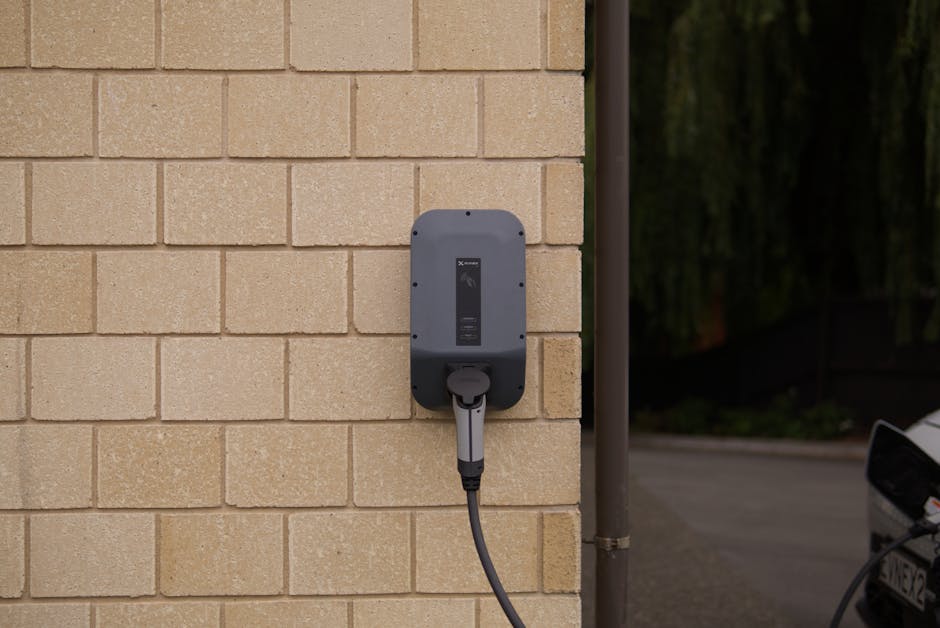
Getting the right wallbox before a big trip is the most practical single upgrade you can make to your EV setup. Here’s how the main options compare.
| Charger | Max Power | Approx. Unit Cost | Charge Time (20–80%, 77kWh) | Best For |
|---|---|---|---|---|
| Granny charger (3-pin Schuko) | 2.3kW | Included | ~22 hours | Emergency backup, rural stops |
| Wallbox Pulsar Plus | 7.4kW | ~€450 | ~8.5 hours | Single-phase homes, most situations |
| Easee One | 11kW | ~€600 | ~5.5 hours | Three-phase homes |
| Zaptec Go | 22kW | ~€700 | ~2.5 hours* | Three-phase, only if car accepts 22kW |
*Only achievable if the car’s onboard AC charger supports 22kW. Most EVs cap at 7.4kW or 11kW AC charging regardless of wallbox rating.
The 7.4kW vs. 11kW Decision
This comes down to your home’s electrical supply, not just budget. Most homes in Southern Europe, the UK, and older housing stock across Germany and Austria are single-phase. On single-phase power, 7.4kW is the practical ceiling regardless of which wallbox you install. Upgrading to an Easee One or Zaptec Go only makes financial sense if your home has three-phase supply AND your car accepts 11kW or higher AC charging.
My recommendation for single-phase homes: the Wallbox Pulsar Plus. Reliable, smart-charging scheduling built in, and at around €450 it’s competitively priced. For three-phase homes, the Easee One at €600 is the better call — cleaner industrial design, a better app, and it auto-adjusts charging speed based on available circuit capacity so it doesn’t trip your breaker.
Keep the Granny Charger in the Boot
The 2.3kW granny charger that came with your car should be in your boot for every long trip. Full stop. Campgrounds, rural hotels, and many gîtes across France and Portugal will let you plug into an outdoor socket overnight. It’s slow — roughly 100–130km of range per night — but it’s free and it exists everywhere. It has bailed me out twice on trips where the only working option in a small village was a single outdoor household socket next to someone’s barn.
CCS Is the Only DC Fast-Charging Standard Worth Planning For in Europe
All new public fast-charging infrastructure being built across Europe uses CCS exclusively. CHAdeMO — once found on older Nissan LEAFs and some Japanese imports — is being phased out of new station buildouts entirely. If your car is a 2026 or newer non-Japanese EV with a DC charging port, it has CCS. You are covered on every major high-speed network on the continent without needing to think about it further.
Cables and Adapters to Pack Before You Leave
Cable prep is where road trip planning consistently falls short. The default assumption is: DC fast chargers have tethered cables, so I’ll be fine. That’s true for motorway fast charging. But AC charging at hotels, campgrounds, destination chargers, and most city car parks almost always requires you to bring your own cable. Here’s what you actually need.
- Type 2 to Type 2 Mode 3 cable, minimum 7 metres — The most-used cable for public AC charging across Europe. A 5m cable looks adequate at home and leaves you a metre short when the charging post is positioned on the wrong side of the parking bay. The Ratio Electric Type 2 cable costs around €75 for a 7m, 32A (7.4kW) version. Get the 32A version specifically, not the cheaper 16A. I’ve used mine for two years of regular road trips without a single issue.
- Your granny charger (3-pin Schuko) — Already in the back of your car, hopefully, but double-check before every trip. It’s more useful on the road than it ever was at home.
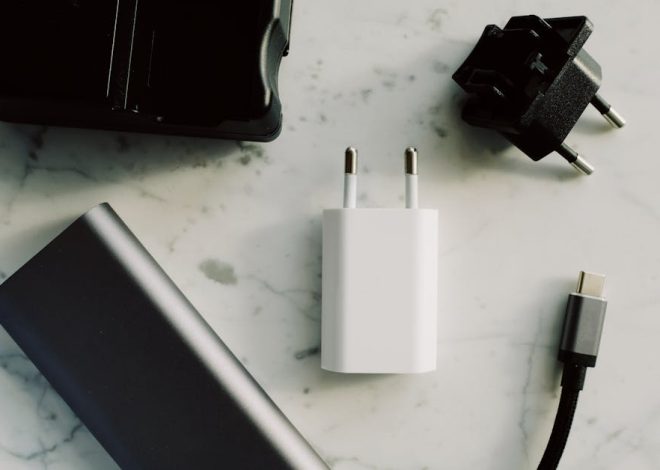
- Schuko-to-French Type E socket adapter — France uses Type E sockets, slightly recessed compared to the Schuko standard used in Germany, Spain, and Central Europe. An adapter costs €8–12 and weighs nothing. Without it, you can’t use a French household socket when the hotel owner offers you an extension lead because the parking charger is broken.
The Tesla Supercharger Question
Tesla opened its Supercharger network to non-Tesla EVs across most of Europe from 2026 onwards. To use it, you need a Tesla-specific CCS adapter (around €175 from Tesla) and the Tesla app. Worth buying if your route goes through Scandinavia or the Alps, where Supercharger density is genuinely high. Less necessary if you’re sticking to France or the Iberian Peninsula, where IONITY coverage on the main corridors is solid enough that you won’t miss it.
What You Don’t Need to Pack
No CHAdeMO adapter unless you’re driving a pre-2019 Nissan LEAF. No Type 1 (J1772) adapter unless you have a US-origin EV. Absolutely no “universal travel adapter kit” — these are marketed to anxious first-timers and mostly contain connectors for standards that no longer exist on new European charging infrastructure. Keep your cable bag simple. Two cables plus one small socket adapter covers 95% of situations.
Mountain Driving and Range Loss: The Numbers You Need to Plan Around
How much does mountain driving actually cut your range?
More than the manufacturer’s quoted range suggests. Crossing the Pyrenees from France into Spain knocked about 30–35% off my expected motorway range for that day. Sustained hill climbing draws more power than flat cruising, and while regenerative braking recovers energy on descents, the net loss on a serious mountain day is 20–30% of your flat-road range estimate.
On any day with 1,000m or more of cumulative elevation gain, plan an extra charging stop or increase your target arrival charge at the previous stop. ABRP (A Better Route Planner) handles this automatically — it adjusts stop placement based on elevation profile, not just distance. Most built-in car navigation systems do not do this accurately.
What is pre-conditioning and does it actually matter?
Pre-conditioning heats or cools the battery to optimal operating temperature before you start driving. In cold conditions — anything below 10°C — a cold battery can lose 20–30% of effective capacity in the first 30 minutes of driving until it warms up naturally. Pre-conditioning eliminates that loss entirely by using grid power to bring the battery to temperature before you unplug.
Set your departure time in the car’s app the night before. On a cold October morning crossing into the Alps, this is the difference between leaving with your full expected range and starting 15–20% under it. It costs about €0.30 in electricity and zero extra time on your morning routine.
Should you sit and let the car warm up, or leave immediately?
Leave immediately after pre-conditioning. The battery is already at temperature. If you pre-condition and then spend 20 minutes at a service station before getting on the road, you’ve lost most of the benefit. The principle is straightforward: pre-condition, unplug, drive.
Route Planning Apps and Charging Networks That Cover Europe
Use A Better Route Planner (ABRP) as your primary navigation tool for cross-border EV trips. For multi-country European routing, nothing else comes close to its accuracy.
ABRP calculates charging stops based on your specific car model, real-time battery state, driving speed, elevation, and outside temperature. The free version handles most trips perfectly well. Premium at €4.99/month adds live traffic integration and more granular car-specific profiles. Connect it to your car via the ABRP app or an OBD-II Bluetooth dongle and it reads your actual state of charge in real time, adjusting stop placement on the fly if you’re running hotter or cooler than predicted.
IONITY vs. Fastned vs. regional networks
IONITY is the most consistent high-speed option on major motorway corridors across Germany, France, Spain, Portugal, Austria, and Italy. Stations run up to 350kW, though most current EVs charge at 100–200kW maximum. Ad-hoc pricing is steep: around €0.69/kWh in Germany. The IONITY Passport subscription at €17.99/month drops that to €0.35/kWh — worthwhile if you do two or more long trips per year.
Fastned is excellent across the Netherlands, Germany, and Belgium — generally cheaper per kWh than IONITY and with a better app. Shell Recharge and Allego fill gaps at non-motorway locations and city charging. In France, Electra is expanding fast and now has solid coverage on secondary routes. Between these networks, you can cross most of Western Europe with no more than 200km between reliable fast-charging stops.
Where the network gets thin
Eastern Europe is the honest weak point. Poland and Hungary have reasonable DC coverage along main E-road corridors. Romania, Bulgaria, and the Balkans have chargers, but station density drops sharply once you leave the primary motorways. In these regions, add PlugShare alongside ABRP — it’s community-verified and regularly surfaces working chargers that don’t appear in commercial databases. Filter for CCS and minimum 50kW. Most importantly: don’t arrive at any Eastern European charging stop below 25% state of charge. The next reliable option may be 80km further than your plan assumed.

Related Posts