

Travelling With an Elderly Parent: Pacing, Comfort and Planning
Why a slower itinerary works better for everyone
The best trip with an elderly parent is built around energy, not a list of attractions. Plan one demanding activity per day, leave a real rest period after lunch, and treat travel time as part of the workload. A two-hour museum visit can become a five-hour effort once you add transport, queues, toilets, meals, and the walk back to the hotel.
How much walking is realistic?
Start with the distance your parent handles comfortably at home, then cut it by at least one-third for an unfamiliar place. If a normal day includes 3,000 steps, do not build a holiday around 10,000-step sightseeing days. Count stairs, slopes, cobblestones, heat, and standing time as part of the effort.
Use the stop-before-tired rule
Do not wait for your parent to say they need a break. Schedule a 20-minute seated stop every 60 to 90 minutes, even when the day appears to be going well. Fatigue often shows up later as poor balance, irritability, confusion, or a slower walk back to the hotel. The clear recommendation is simple: finish an activity while your parent still has energy for dinner, medication, and the journey home.
A good itinerary has empty space. If the trip has five sightseeing days, make two of them deliberately light: breakfast nearby, one short outing, and an early return. That spare capacity is not wasted time; it is protection against delays, poor sleep, bad weather, and the ordinary surprises that make travel harder with age.
Build each travel day around one anchor activity
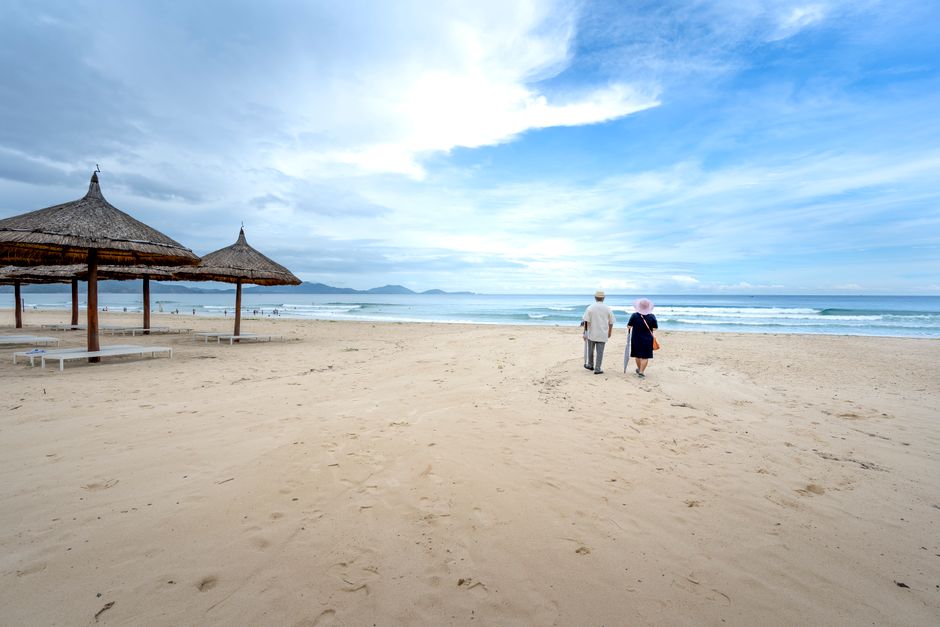
The strongest planning rule is one anchor activity per day. Everything else should be optional, close by, and easy to cancel. This keeps the trip enjoyable when a flight delay, poor night of sleep, or unexpected medical appointment changes the schedule.
A workable seven-hour sightseeing day
Use this as a spending and energy budget rather than a rigid timetable.
| Time | Plan | Reason |
|---|---|---|
| 8:00–9:00 | Breakfast and medication | Start before the day becomes rushed |
| 9:30–11:30 | Anchor attraction | Use the morning energy window |
| 11:30–12:00 | Seated break and toilet stop | Prevent fatigue from building |
| 12:00–13:30 | Lunch close to the attraction | Avoid a second long transfer |
| 13:30–15:30 | Hotel rest | Protect the evening and next day |
| 16:00–18:00 | Optional local activity | Easy to cancel without losing money |
Budget for recovery time
A rest block can save more money than it costs. Book attractions with timed entry only when the cancellation terms are reasonable.
The verdict: spend money on shorter transfers and flexible bookings before paying for extra attractions. Comfort is a planning expense, not a luxury add-on.
Book airport and transport assistance before departure
Airport assistance is one of the few travel services that can remove a large physical burden without adding a large fee. Ask the airline for wheelchair or guided assistance when booking, then confirm it 48 hours before departure. Assistance does not always mean your parent cannot walk; it can cover long terminals, security queues, gate changes, and the distance between a plane door and the baggage hall.
Use this three-part booking checklist
- State the exact need: help through the terminal, help to the aircraft seat, or help with stairs if the aircraft uses a remote stand.
- Ask what happens at connections. A passenger may need a new escort after landing, especially during a tight transfer.
- Record the request number, airline phone number, and a contact person in the travel folder and on your phone.
- Arrive early enough for check-in, but do not arrive so early that your parent spends three hours standing or sitting in a noisy terminal.
- Keep medication, water, a light snack, glasses, and an extra layer in the personal bag rather than checked luggage.
Plan the transfer, not just the flight
The most stressful part may be the trip between the airport and the hotel. Confirm the vehicle has enough room for a folded mobility aid and ask the driver to meet inside the arrivals area when possible. For trains, choose a route with elevators and reserve seat assistance where the operator offers it.
Do not assume a connecting airport works like the departure airport. Terminal maps, elevator outages, and security rechecks can change the practical distance. The clear recommendation is to buy time through assistance and a simple transfer, not through a more expensive airline cabin.
Which travel products are worth paying for?

My opinion: buy one item that solves a verified problem, not a full set of senior travel gear. Marketing often turns basic convenience into a medical-looking shopping list. Test the item at home with the actual parent, their normal shoes, and a realistic load before spending money on it.
Best products for specific travel problems
Do not confuse a premium price with easier travel
The Drive Medical rollator is expensive, but the price makes sense when a parent already relies on a rollator and will use the seat, large front wheels, and one-hand folding mechanism. It does not make sense as a first mobility aid chosen online without a proper fit check. The Travelon backpack has useful security features, but the caregiver should carry it; putting 11 liters of gear on an older parent can create shoulder strain.
Bottom Line: choose the rollator only when it matches an existing mobility need, use the backpack for the caregiver, and skip premium luggage unless long-term repair value matters to you.
How should you handle medication, records, and travel insurance?
Medical preparation is less about carrying every possible document and more about making the important information reachable during a delay. Keep the original medication schedule, a current list of prescriptions, allergies, emergency contacts, and the parent’s doctor details in a carry-on folder and in an encrypted phone note.
Can medication go through airport security?
Yes, but keep medication in carry-on luggage and allow extra screening time. Medically necessary liquids can exceed the normal 100 millilitre limit in the United States when declared for screening. Do not place essential medication in checked luggage, where a delay or lost bag can create an avoidable crisis. Carry enough for the trip plus at least two extra days, and keep medicines in their usual labelled containers when travelling internationally.
Read the medical-condition wording before buying. Check emergency medical limits, medical evacuation, pre-existing-condition coverage, trip cancellation, missed connections, and the process for obtaining approval before a hospital admission. A cheap policy with a large exclusion is not a bargain.
How much information should the family carry?
Carry a one-page emergency summary with diagnoses, medication names and doses, allergies, mobility limits, blood type if known, and the preferred hospital contact. Give one copy to the parent and one to the travelling companion so one lost bag does not remove every record.
Common planning mistakes that make the trip harder

The most expensive mistake is treating a parent’s best day at home as the guaranteed energy level for every travel day. Travel adds poor sleep, unfamiliar bathrooms, long queues, changed meal times, and more decisions. Plan for the lower-energy version of the day, then enjoy the bonus when your parent feels strong.
Six mistakes to remove before booking
- Too many hotel changes: moving every night creates repeated packing, checkout, transport, and room-finding work. Use one base for at least three nights when possible.
- Nonstop sightseeing: two major attractions in one day often cost more in taxis and meals than the extra ticket is worth. Pick one and leave the second as an option.
- Ignoring bathroom distance: a beautiful room becomes poor value when the nearest accessible toilet is across a lobby, down stairs, or behind a locked restaurant.
- Assuming stairs are manageable: ask for elevator access, step-free entry, grab bars, shower type, and the distance from the entrance to the room. Get the answer in writing.
- Leaving the return day unplanned: exhaustion peaks when people rush to check out, reach the airport, and manage baggage. Arrange a late checkout or a quiet airport plan when the budget allows.
When should you cancel an activity?
Cancel when your parent is unsteady, unusually confused, dehydrated, short of breath, or unable to follow their normal medication and meal routine. The lost ticket is cheaper than turning a minor problem into an emergency. Keep cancellation terms visible in the itinerary, and reserve only the parts of the trip that genuinely need advance payment.
The verdict is direct: protect sleep, bathrooms, and transport first; attractions come after those three costs are under control.
My short verdict on destination choice
Pick the easy base
For a first trip with an elderly parent, choose a destination with one hotel base, reliable elevators, short transfers, mild weather, flat walking routes, and a grocery store or pharmacy within ten minutes; that may sound less ambitious than crossing three cities, but it gives you more usable hours and lowers the chance that a small delay ruins the whole itinerary.
Pay for access, not status
The best room is not automatically the most expensive room: a ground-floor or elevator-accessible room near breakfast, a quiet air-conditioned space, and a walk-in shower can matter more than a view, a club lounge, or a larger lobby.
The single most important takeaway is this: when travelling with an elderly parent, spend your planning effort and budget on recovery time, short distances, and reliable help before adding more destinations or attractions.

Related Posts