Train Tour Of Europe 2026: The Train Tourist’s Europe Problem: Booking Routes That Don’t Waste 14 Days
You have two weeks. You want to see Paris, the Alps, maybe Rome or Vienna. You open the rail map and every city looks close. Then you check actual train times and realize Lyon to Milan eats an entire day. Or that “scenic route” through Switzerland costs double for the same destination. This is the real problem with planning a train tour of Europe in 2026: not the trains themselves, but the gap between how the map looks and how your actual days disappear.
Most first-timers overstuff the itinerary. They pick 7 cities in 14 days and spend 40% of daylight hours staring at rail station ceilings. The fix is not “travel slower” advice you’ve heard a thousand times. The fix is route math: knowing which connections are genuinely efficient, which passes actually save money in 2026, and which legs deserve a night train instead of a hotel.
The 2-Hour Connection Rule Nobody Follows
Here’s the single most useful planning filter I use for any multi-country rail trip: never schedule a connection under 12 minutes, and never book a route where a missed connection strands you overnight. Sounds obvious. Almost nobody does it.
Deutsche Bahn’s own punctuality data shows long-distance trains in Germany ran about 68% on time in 2026, and that number drops further on cross-border routes. A 10-minute connection at Frankfurt Hauptbahnhof is a coin flip. You miss it, you wait an hour, you lose your seat reservation, and you arrive at your destination tired and annoyed. That’s not a travel story. That’s a logistics failure.
What to do instead
- Build a minimum 25-minute buffer for any connection crossing a border.
- Book seat reservations on high-speed legs even if your pass says “reservation not required.” The TGV from Paris to Strasbourg regularly sells out of pass-holder seats in summer.
- For same-day connections involving two different rail operators (say, SNCF to Trenitalia), treat them as separate trips. Buy a flexible ticket for the second leg or accept you might wait.
When the rule saves you real money
A missed connection on a point-to-point ticket means buying a new ticket at walk-up price. Paris to Milan walk-up on the TGV can run €130–€180. The same seat booked 60 days out costs €49–€69. Your buffer is insurance that costs nothing except 25 minutes.
Eurail Pass vs. Point-to-Point: The 2026 Math Changed
Eurail restructured its pricing in 2026, and the old advice — “passes are only worth it for long trips” — no longer holds cleanly. The new structure makes passes more attractive for medium-length trips with 4–6 travel days, but worse for someone doing 2 long legs and flying the rest.
Here’s the breakdown for a common 2026 route: Paris → Lyon → Geneva → Milan → Florence → Rome. Six legs. A Eurail Global Pass with 6 travel days in 1 month costs roughly €389 for adults under 28 and €449 for adults 28+. That’s about €65–€75 per leg before reservation fees. Point-to-point tickets on this route, booked 2–3 months ahead, total around €220–€280. The pass loses.
But change the route to include Switzerland, where point-to-point fares are notoriously high, and the math flips. Add Zurich → Interlaken → Milan. Those two Swiss legs alone can cost €90–€140 each. Suddenly the pass wins.
| Route Type | Point-to-Point Total (Booked Early) | Eurail Pass Total (6 Days) | Winner |
|---|---|---|---|
| France + Italy only (Paris–Rome via Lyon/Florence) | €220–€280 | €449 + ~€60 reservations | Point-to-point |
| France + Switzerland + Italy (adds Geneva–Interlaken–Milan) | €380–€480 | €449 + ~€70 reservations | Eurail Pass (if traveling solo) |
| Germany + Austria + Czech Republic (Berlin–Munich–Vienna–Prague) | €150–€210 | €389–€449 + minimal reservations | Point-to-point, easily |
The verdict: for Western Europe high-speed corridors, book early point-to-point tickets. For Switzerland-heavy itineraries or trips with 6+ travel days, run the Eurail numbers. Do not buy a pass on vibes.
The 2026 Night Train Comeback: What Actually Works
Night trains are back in a real way, but the quality gap between routes is enormous. The ÖBB Nightjet sets the standard: Vienna to Venice, Vienna to Paris, Berlin to Brussels. These trains have proper sleeper compartments, showers at the station lounges, and breakfast included in sleeper class. A Vienna–Venice Nightjet sleeper for two people runs about €180–€240 total, which replaces both a hotel night and a travel day. That’s genuinely good value.
But the newer private operators are hit or miss. European Sleeper runs Brussels–Amsterdam–Berlin–Prague, and the couchette cars are old. You’ll sleep, but barely. The French government’s revived Paris–Nice and Paris–Toulouse night trains are fine but sell out months ahead for summer 2026.
My rule: book Nightjet sleepers without hesitation. Book other night trains only if the alternative wastes a full daytime travel day.
Five Route Mistakes That Quietly Ruin Train Tours
These are not dramatic failures. They’re the small leaks that turn a good trip into a tiring one.
- Booking the scenic route on the wrong day. The Bernina Express from Chur to Tirano is spectacular, but if you ride it on a rainy Tuesday and then sit on a regional train for 4 more hours to Milan, you’ve spent a whole day on transit without seeing much. Check weather forecasts 48 hours out and flex your schedule.
- Ignoring seat reservation deadlines. TGV, Thalys (now Eurostar), and Frecciarossa trains require reservations. Pass holders who skip this get denied boarding or forced to stand. Book reservations the same day you buy your pass.
- Packing like a flight traveler. No one weighs your bag on a train, but you still have to carry it up 3 flights of stairs at old stations like Venezia Santa Lucia or Gare de Lyon. A 40L backpack beats a 70L roller every time.
- Assuming “direct” means “fast.” A direct regional train from Nice to Genoa takes 3.5 hours because it stops at every coastal town. The high-speed alternative doesn’t exist on that route. Check duration, not just connections.
- Planning every day in advance. The best train moments happen when you stay an extra day in a town you didn’t expect to love. Book your first 2–3 legs and your last leg. Leave the middle open if your pass allows.
Where to Actually Go: A Realistic 2026 Route
Forget the 7-cities-in-14-days fantasy. Here’s a route that gives you four distinct regions without a single wasted day. It assumes a Eurail Pass or point-to-point tickets booked 60–90 days out.
Days 1–3: Paris (arrive, adjust, one day trip)
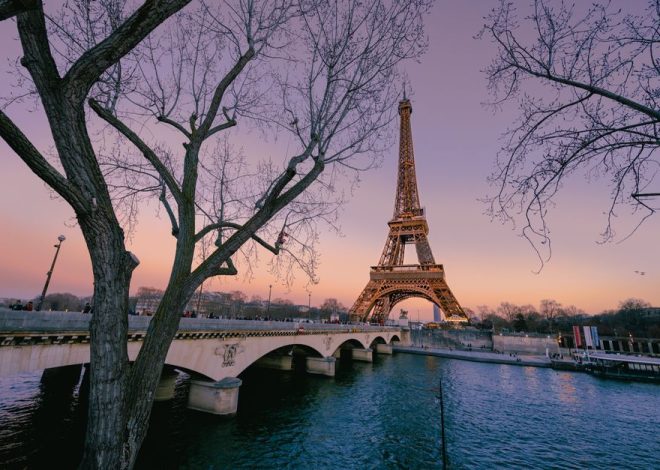
Fly into Paris. Stay 3 nights. Take one day trip to Reims or Chartres by regional train to shake off jet lag. Do not try to “do Paris” in 48 hours. You can’t.
Days 4–6: Lyon or Strasbourg, then into Switzerland
Take the TGV to Lyon (2h) or Strasbourg (1h46m). Both are food cities. Lyon is bigger and grittier; Strasbourg is prettier and closer to Switzerland. From Strasbourg, you can reach Basel in 1h20m. From Lyon, Geneva takes 2h. Pick one, not both.
Days 7–9: Swiss Alps, but only one base
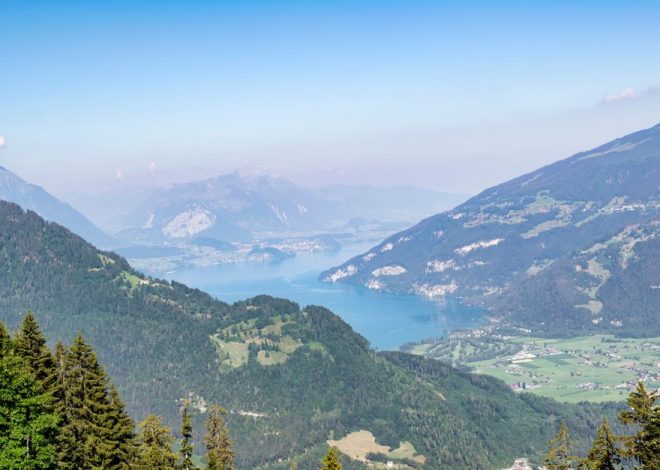
Stay in Interlaken or Lucerne. Do NOT try to “see Switzerland” in 3 days. Pick one mountain excursion — Jungfraujoch from Interlaken or Mount Pilatus from Lucerne — and spend the rest of the time walking, eating, and taking a lake ferry. The Swiss Travel Pass is worth it for these 3 days if you’re doing a mountain excursion and multiple lake ferries.
Days 10–12: Northern Italy
From Interlaken, the train to Milan takes 3h with a change at Spiez. From Milan, Florence is 1h55m on Frecciarossa. Stay in Florence, not Milan, unless you’re flying home from Milan. Florence gives you walkable density and day-trip access to Siena or Bologna.
Days 13–14: Rome or Venice, then fly home
Florence to Rome is 1h30m. Florence to Venice is 2h15m. Pick one. Rome if you want history and chaos. Venice if you want something that feels like a fever dream. Fly home from whichever you choose.
Total train time: about 12–14 hours over 14 days. That leaves you actual time in places, not just on trains.
What I’d Tell a Friend Planning This Trip
Book your first two legs and your last leg. Leave the middle flexible. Buy point-to-point tickets unless Switzerland is a major chunk of your route, in which case run the Eurail numbers. Book Nightjet sleepers the day they open. And stop trying to see everything.
The train tour of Europe in 2026 is not about the trains. It’s about what happens between them — the 36 hours in Lyon where you eat at a bouchon and walk along the Rhône, the unplanned afternoon in a Swiss village where the only thing on the schedule is a coffee and a lake view. If your itinerary doesn’t leave room for that, you’ve planned a commute, not a trip.

Related Posts