Staying Cool While Travelling in a European Heatwave
Why European heatwave travel is harder than a hot holiday
Heatwave travel is a route-planning problem, not a test of willpower. A normal summer day lets you walk across a city at noon, queue outside a museum, and eat lunch on a sunny terrace. A heatwave changes the cost of every one of those choices. At 32°C, a ten-minute walk with a backpack can feel much harder than the same walk at 24°C. Dark paving, reflected sunlight, crowded public transport, and high humidity all add strain.
The basic problem is heat gain. Your body must lose heat through sweat and air movement, but heavy clothing, still air, and humid weather slow that process. A city with dry 35°C weather can feel more manageable in shade than a humid 30°C city with no breeze. You also lose judgment when tired or dehydrated, so the mistake often happens before you notice the warning signs: you keep walking because the next landmark is only fifteen minutes away.
Build each day around the cool hours
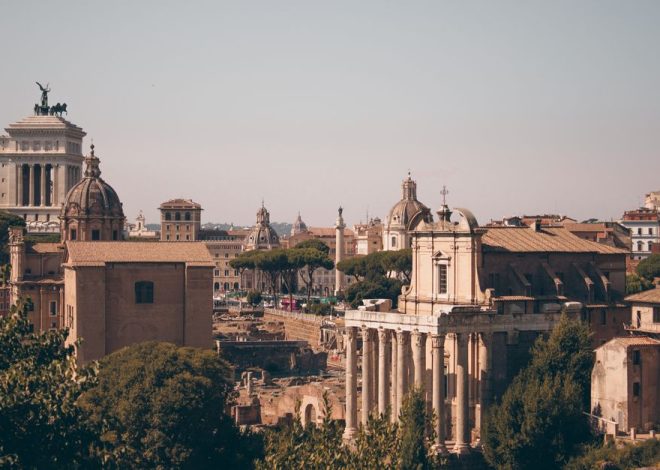
Put outdoor movement first. Walk, take photographs, and visit open-air sites between roughly 06:30 and 10:30, then again after 18:00. Use the middle of the day for a museum, long lunch indoors, a hotel nap, or a train journey. This works especially well in Seville, Rome, Athens, Valencia, and inland Croatia, where exposed streets can hold heat long after the sun reaches its highest point.
Do not fill every hour with bookings. Leave at least one flexible block so you can shorten a walk, change a route, or sit inside without losing the whole day.
Find shade before you need it
Look at the map before leaving and mark shaded squares, arcades, libraries, supermarkets, cafés, and public buildings with air conditioning. A route beside a river or through a park may take ten minutes longer but feel far better than the shortest route across a broad plaza. Carrying less also helps: a light day bag, loose clothing, and easy access to water reduce the effort of every stop.
The clear verdict is simple: on a heatwave trip, a shorter sightseeing list with cool breaks beats an ambitious itinerary that leaves you exhausted by lunchtime.
When should you walk, sightsee, and travel?
Use the cool hours for movement
The table below gives a practical daily rhythm for a city trip during a heatwave. Shift it earlier or later if local sunrise, sunset, or opening times differ.
| Time | Best use | Heat strategy |
|---|---|---|
| 06:30–09:00 | Walking, markets, photography | Start outdoors while streets and stone surfaces are cooler. |
| 09:00–11:00 | Main attraction or short transfer | Choose shade and avoid long exposed queues. |
| 11:00–16:30 | Museums, lunch, rest, train travel | Stay indoors or in deep shade; avoid strenuous walking. |
| 16:30–19:00 | Slow sightseeing and café stops | Resume activity only when shade and airflow return. |
| 19:00–22:00 | Dinner, waterfront walks, evening sites | Keep water available and check for lingering humidity. |
Move indoor plans when the forecast rises
When the forecast reaches 30°C or more, reserve your most exposed activity for early morning. When it reaches 35°C or more, treat the hottest hours as a transport and recovery window. That means no long hill climbs, beach walks without shade, or outdoor queues in direct sun. A timed museum ticket at 13:00 is useful because it gives you a cool destination during the worst part of the day, but the journey to it still needs planning.
Check the heat warning issued by the national weather service, not only a general travel app. Official alerts may include night-time temperatures, humidity, and health advice that a simple daily forecast leaves out. If your accommodation has no air conditioning, confirm that it has shutters, fans, cross-ventilation, or a cool basement area before booking a top-floor room.
This schedule wins because it protects energy for the moments that matter. You see more by moving at the right time, not by forcing a full day outside.
What to pack for a cooler walking day
Pack a small cooling kit
A useful heatwave kit should be light enough to carry all day and specific enough to solve real problems. For a walking-heavy day, this combination is the best balance of weight, price, and usefulness:
- Sun-covering layer: The Uniqlo AIRism UV Protection Full-Zip Hoodie is commonly priced around €39.90 and offers a light, loose layer with UV protection. It works better than a tight dark T-shirt because it covers the shoulders without trapping as much heat.
Use the kit before you feel overheated
Fill the bottle before leaving, wet the cooling towel at the first refill point, and wear the hat before the sun becomes uncomfortable. Do not wait until you feel desperate for water. Small, regular drinks work better during a long walk than ignoring thirst and then drinking a large amount at once. If you sweat heavily, pair water with a salty meal or a standard electrolyte drink; plain water alone does not replace every mineral lost through sweat.
Avoid the common packing mistake of carrying too much. Two heavy bottles, a thick cotton hoodie, and a large camera bag create more heat and effort than they solve. For most city days, one bottle, one light layer, a hat, sunglasses, sunscreen, and a small cooling towel are enough.
Heatwave travel questions that prevent bad decisions
How much water should I carry?
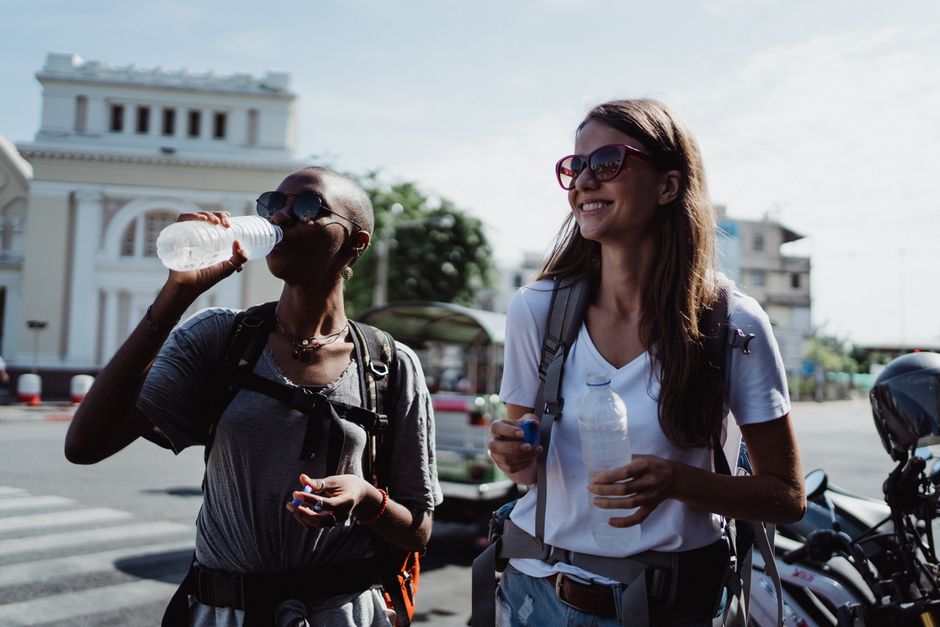
Carry enough for the next two to three hours, then plan a refill rather than carrying several litres all day. In a hot European city, that often means 750 millilitres to 1 litre for a morning walk, depending on your size, pace, shade, and sweat level. Use public fountains, cafés, supermarkets, and hotel taps where the water is safe to drink. A refill plan is more reliable than assuming you will find a shop at the exact moment you need one.
Is air conditioning always the best escape?
No. A cool indoor space helps, but a sudden move from intense heat into very cold air can feel unpleasant, especially when clothing is damp with sweat. Choose a shaded, ventilated place first if you only need a short break. For a longer recovery period, use a properly cooled room, remove a heavy layer, drink slowly, and let your breathing settle before walking again.
When should I stop sightseeing?
Stop early if you develop a headache, dizziness, unusual weakness, nausea, cramps, confusion, or a fast heartbeat. Move to shade or air conditioning, loosen clothing, cool the skin with water, and ask someone nearby for help. Confusion, fainting, a seizure, or a person who cannot drink requires emergency help; call 112 in the European Union and follow the operator’s instructions. Do not leave an unwell traveller alone or send them walking back to the hotel.
The biggest mistake is treating symptoms as an inconvenience because a ticket or reservation has already been paid for. A missed attraction can be rescheduled. A serious heat illness can end the trip.
The simplest winning plan for a European heatwave
Best default plan
When to change it
If the forecast reaches 35°C, if nights stay unusually warm, or if anyone in the group feels unwell, cancel the long outdoor plan and choose a shorter indoor visit instead, because the specific recommendation is clear: for travellers who want to see a European city safely during a heatwave, book the main walk at sunrise, carry one litre of water, wear a broad-brimmed hat and light covering, and reserve the afternoon for a cool indoor space.

Related Posts